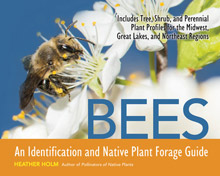
We all love lists. As we click on a promising headline, we anticipate an easily digested scrap of knowledge – not too much information, not burdened with complexity, but knowledge nevertheless - simplified, ordered, finite, authoritative. Armed with a list, the gardener can face up with a measure of confidence to the bewildering array of choices in the seed catalogue or garden centre.
But watch out - not all lists are created equal. In fact, a study published in the journal BioScience in 2014 looked at lists of pollinator-friendly plants in the U.K., Canada and the U.S. and found surprising shortcomings and misinformation, both in the lists, and in plant labels that rely on them. One list, compiled by a government-funded organization called Natural England, was described as looking “very much as if it was put together late one Friday afternoon.”
A list is only as good as the data that has gone into it, the study authors point out, but surprisingly they found the empirical sources on which lists are based are almost never provided. The study found that many good pollinator plants were omitted while poor plants were sometimes recommended. Here’s the link: ‘
Listmania: The Strengths and Weaknesses of Lists of Garden Plants to Help Pollinators’ by Mihail Garbuzov and Francis L. W. Ratnieks.
Read more